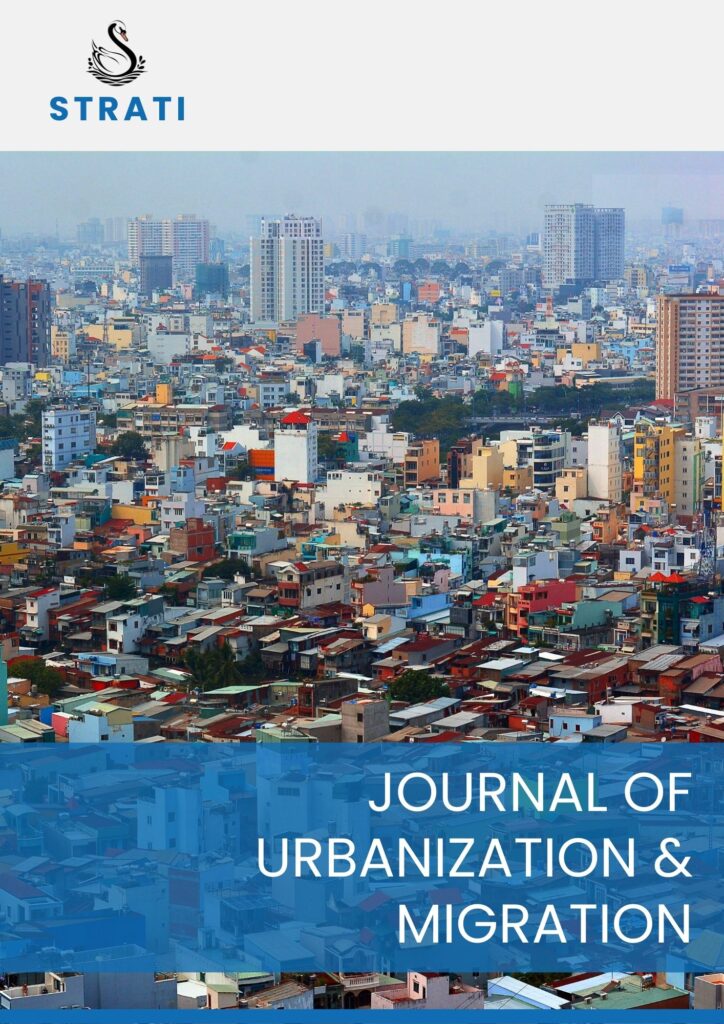
STRATI Journal of Urbanization and Migration

Home

Announcements

  • Expression of Interest
  • Aims and Scope

Journal Submission Guidelines

The STRATI Journal of Urbanization and Migration is an international, peer-reviewed, open-access journal that serves as a leading platform for scholarly, policy-oriented, and practice-based research on the dynamics of urban growth, human mobility, and their social, economic, environmental, and governance implications. The journal encourages contributions from a wide range of disciplines, including urban studies, migration studies, economics, geography, sociology, political science, environmental studies, public policy, and development studies.

With a strong focus on the interconnectedness of urbanization and migration, the journal examines how rural-to-urban, urban-to-urban, international, and forced migration shape urban development, spatial planning, labor markets, housing systems, social integration, and environmental sustainability. It emphasizes evidence-based research that addresses pressing challenges such as informal settlements, infrastructure deficits, climate-induced displacement, urban inequality, and governance reforms in rapidly urbanizing and migration-affected regions.

The Journal aims to:

  • Advance theoretical and empirical understanding of the processes, patterns, and impacts of urbanization and migration.
  • Highlight the interrelationship between migration flows and urban development, including both opportunities and challenges.
  • Promote policy-relevant research that supports inclusive, sustainable, and resilient cities and communities.
  • Facilitate interdisciplinary dialogue between academics, urban planners, policymakers, international agencies, NGOs, and community-based organizations.
  • Contribute to the global knowledge base on managing urbanization and migration in ways that reduce inequality, foster integration, and enhance quality of life.

Scope includes (but is not limited to):

  • Drivers, patterns, and consequences of migration in urban contexts.
  • Urbanization trends in the Global South and North.
  • Urban governance and planning in migration-affected cities.
  • Climate change and environmental drivers of migration to urban areas.
  • Labor market integration, housing, and public service delivery in urban settings.

Detailed Themes

Potential areas of focus include, but are not limited to:

  1. Patterns and Drivers of Migration – rural-to-urban, urban-to-urban, international, circular, and seasonal migration.
  2. Urban Demographic Transitions – population growth, density changes, and demographic composition in cities.
  3. Urbanization and Economic Development – linkages between migration, labor markets, and economic transformation.
  4. Housing and Informal Settlements – slum dynamics, housing policies, and upgrading strategies.
  5. Infrastructure and Urban Services – water, sanitation, transport, and energy provision for growing populations.
  6. Urban Inequality and Social Inclusion – integration of migrants, reduction of spatial segregation, and inclusive governance.
  7. Labour Market Integration – skills utilization, employment challenges, and entrepreneurship among migrants.
  8. Urban Poverty and Livelihoods – informal economy, social protection, and livelihood diversification.
  9. Climate Change, Displacement, and Urban Migration – adaptation strategies, planned relocation, and resilience planning.
  10. Governance and Urban Policy – institutional frameworks, decentralization, and participatory planning.
  11. Health, Education, and Social Services for Migrants – access, equity, and service delivery innovations.
  12. Gender and Migration in Urban Contexts – gender-specific vulnerabilities, empowerment, and roles in urban economies.
  13. Youth, Migration, and Urban Futures – aspirations, education, employment, and political participation.
  14. Cultural Diversity and Urban Cohesion – multiculturalism, identity, and community relations.
  15. Smart Cities and Digital Inclusion – technology’s role in managing migration flows and urban growth.
  16. Urban Land Use and Spatial Planning – zoning, land tenure, and urban-rural linkages.
  17. Transport and Mobility in Migrant-Rich Cities – public transit systems, accessibility, and commuting patterns.
  18. Migration Governance at the City Level – local government responses, partnerships, and global city networks.
  19. Remittances and Urban Development – role of financial flows from migrants in shaping city growth.
  20. Comparative Urban-Migration Studies – cross-country analyses and lessons for policy transfer.

Send your paper to Email: strat.institute@gmail.com

STRATI Journal of Urbanization and Migration” invites the university professors, researchers, and experts including experts based in government and non-government agencies and communities and members of civil society to serve as Editor(s), Sub-Editor(s), Guest Editors, Members on Advisory Board, and Peer Review Board in varied areas of scientific knowledge and expertise.

The expression of interest along with the Curriculum Vitae including a passport size and Google Scholar link can be sent to the Consulting Editor at E-mail: strat.institute@gmail.com