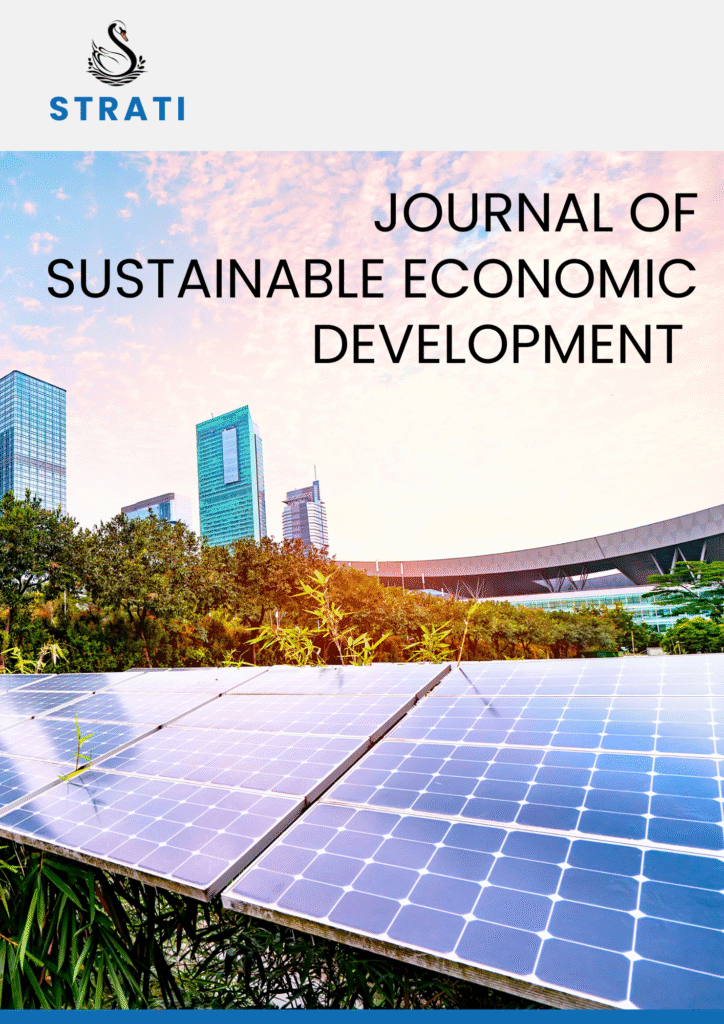
STRATI Journal of Sustainable Economic Development

Home

Announcements

  • Expression of Interest
  • Aims and Scope

Journal Submission Guidelines

The STRATI Journal of Sustainable Economic Development is a peer-reviewed, interdisciplinary, and open-access international journal that publishes original research, policy analyses, and practice-oriented articles focusing on the integration of economic growth with sustainability, equity, and environmental stewardship. The journal provides a platform for academics, policymakers, development professionals, and practitioners to engage in scholarly dialogue on the pathways, challenges, and innovations associated with sustainable economic development across local, national, and global contexts.

This journal is especially interested in contributions that explore transformative development strategies and sustainable livelihoods within the framework of the Sustainable Development Goals (SDGs). It invites papers that bridge theory and practice, providing actionable insights into inclusive economic systems, resource-efficient production, green transitions, and resilience against social and environmental shocks.

The journal emphasizes quality, originality, and relevance, and welcomes submissions between 6,000 to 8,000 words with a succinct abstract of not more than 200 words. All submissions undergo a rigorous double-blind peer review process. A strict zero-plagiarism policy is enforced, and a plagiarism report must accompany each submission. STRATI strives for a fast turnaround time of approximately two months from submission to first decision to encourage timely engagement with emerging issues.

The STRATI Journal of Sustainable Economic Development aims to advance the discourse on how economies can grow in a manner that is inclusive, resilient, and environmentally sound. It seeks to promote integrated thinking and cross-disciplinary approaches that address the fundamental interdependence between economic systems, human well-being, and ecological sustainability.

The journal’s core mission is to contribute to the theoretical, empirical, and policy understanding of sustainable development by focusing on economic strategies that reduce inequality, safeguard the environment, and promote intergenerational equity. It encourages contributions from economics, development studies, environmental science, sociology, public policy, political economy, and related disciplines.

Papers that contribute to the design and evaluation of policies aimed at decarbonization, green jobs, rural-urban linkages, sustainable agriculture, climate resilience, circular economy, and financial mechanisms for sustainable growth are particularly welcomed. The journal serves as a valuable resource for researchers, practitioners, and policymakers at the forefront of sustainable development debates.

Detailed Themes

The journal encourages submissions on (but not limited to) the following thematic areas:

  1. Theories and models of sustainable economic development
  2. Economics of sustainability and resilience
  3. Inclusive growth and inequality reduction
  4. Green economy and low-carbon development
  5. Climate-resilient infrastructure and planning
  6. Decarbonization and just energy transition
  7. Circular economy and resource efficiency
  8. Sustainable agriculture and rural development
  9. Urban sustainability and smart cities
  10. Nature-based solutions and ecosystem services
  11. Industrial policy and green innovation
  12. Employment, decent work, and green jobs
  13. Sustainable consumption and production patterns
  14. Gender dimensions of sustainable development
  15. Youth, education, and demographic dividends
  16. Environmental valuation and natural capital accounting
  17. Development finance, green bonds, and ESG investment
  18. Trade, globalization, and sustainable supply chains
  19. Digital economy and sustainable innovation
  20. Resilience to pandemics, disasters, and climate shocks
  21. Sustainable livelihoods and poverty alleviation
  22. Sustainable Development Goals (SDGs) and their implementation
  23. Policy coherence and institutional frameworks for sustainability
  24. Indicators, metrics, and monitoring of sustainable development
  25. Ethics, equity, and intergenerational justice in development
  26. Governance mechanisms for sustainable transitions
  27. South-South cooperation and sustainable regional development
  28. Climate finance, carbon markets, and international agreements
  29. Migration, displacement, and sustainable integration
  30. Digital inclusion and sustainable technology diffusion

Send your paper to Email: strat.institute@gmail.com

STRATI Journal of Sustainable Economic Development” invites the university professors, researchers, and experts including experts based in government and non-government agencies and communities and members of civil society to serve as Editor(s), Sub-Editor(s), Guest Editors, Members on Advisory Board, and Peer Review Board in varied areas of scientific knowledge and expertise.

The expression of interest along with the Curriculum Vitae including a passport size and Google Scholar link can be sent to the Consulting Editor at E-mail: strat.institute@gmail.com