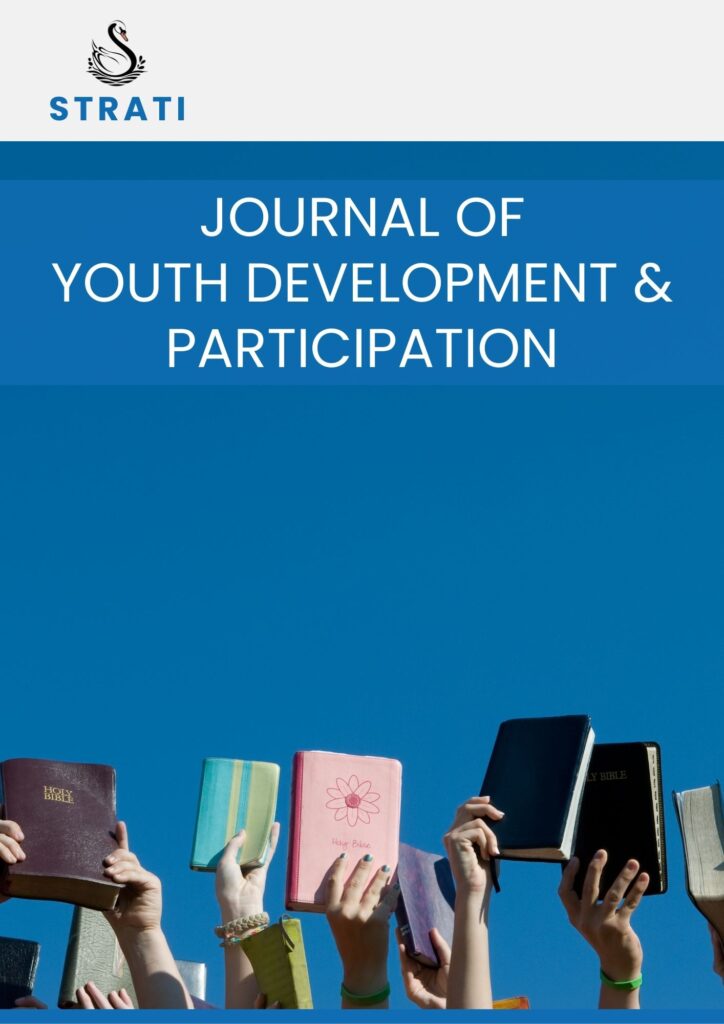
STRATI Journal of Youth Development and Participation

Home

Announcements

  • Expression of Interest
  • Aims and Scope

Journal Submission Guidelines

The STRATI Journal of Youth Development and Participation is an international, peer-reviewed, open-access journal dedicated to advancing scholarship, policy, and practice on the holistic development and meaningful engagement of young people in society. The journal provides an interdisciplinary platform for researchers, practitioners, youth leaders, and policymakers to share innovative research, case studies, and policy analyses on youth empowerment, civic engagement, leadership development, entrepreneurship, education, employment, and participation in governance and community development.

The journal welcomes original empirical and theoretical contributions, comparative analyses, participatory action research, and practice-based insights. It is committed to amplifying youth voices, integrating gender perspectives, and fostering inclusive approaches to youth policy and programming. Manuscripts should typically range between 6,000–8,000 words, with abstracts not exceeding 200 words, and must undergo double-blind peer review. A zero-tolerance plagiarism policy is enforced, with all submissions accompanied by a plagiarism report.

Its readership spans academia, international development agencies, youth organizations, NGOs, community-based organizations, policymakers, and practitioners engaged in youth-related research and programming.

The STRATI Journal of Youth Development and Participation aims to generate and disseminate high-quality research that supports the creation of enabling environments for youth development, agency, and participation in economic, social, political, and cultural life. The journal promotes critical inquiry into youth-related policies, programs, and practices that contribute to sustainable and equitable societies.

It seeks to strengthen the evidence base for youth empowerment by exploring the interlinkages between education, skills, health, livelihoods, civic participation, human rights, technology, culture, and the environment. By integrating local, national, and global perspectives, the journal aspires to inform innovative policy solutions and program designs that enhance youth capacities, leadership, and resilience.

Detailed Themes

The journal welcomes articles under (but not limited to) the following thematic areas:

  1. Youth participation in governance, democracy, and civic engagement
  2. Youth leadership development and political representation
  3. Education, skills development, and employability for youth
  4. Youth entrepreneurship and innovation ecosystems
  5. Digital literacy, social media activism, and online participation
  6. Youth and climate action: engagement in environmental sustainability
  7. Gender perspectives in youth participation and empowerment
  8. Youth in rural and marginalized communities
  9. Youth migration, diaspora engagement, and remittance economies
  10. Youth rights, advocacy, and legal frameworks
  11. Health, well-being, and mental health of young people
  12. Youth and conflict prevention, peacebuilding, and social cohesion
  13. Volunteerism and community service participation
  14. Youth participation in disaster risk reduction and humanitarian action
  15. Cultural and creative industries as platforms for youth engagement
  16. Youth access to financial services and financial literacy
  17. Inclusion of youth with disabilities in development processes
  18. Global youth movements and transnational solidarity networks
  19. Role of education systems in fostering civic and democratic values
  20. Youth perspectives on sustainable development and the SDGs
  21. Public policy frameworks for youth development
  22. Youth participation in science, technology, engineering, and mathematics (STEM)
  23. Sports, recreation, and youth empowerment
  24. Youth-led research and participatory action research methodologies
  25. Barriers to youth participation and strategies for inclusion
  26. Impact of COVID-19 on youth engagement and development
  27. Youth involvement in monitoring and evaluation of public programs
  28. Entrepreneurship training, incubation, and funding opportunities for youth
  29. Digital divides and ensuring equitable access for youth
  30. Case studies of successful youth-led initiatives at local, national, and global levels

Send your paper to Email: strat.institute@gmail.com

STRATI Journal of Youth Development and Participation” invites the university professors, researchers, and experts including experts based in government and non-government agencies and communities and members of civil society to serve as Editor(s), Sub-Editor(s), Guest Editors, Members on Advisory Board, and Peer Review Board in varied areas of scientific knowledge and expertise.

The expression of interest along with the Curriculum Vitae including a passport size and Google Scholar link can be sent to the Consulting Editor at E-mail: strat.institute@gmail.com