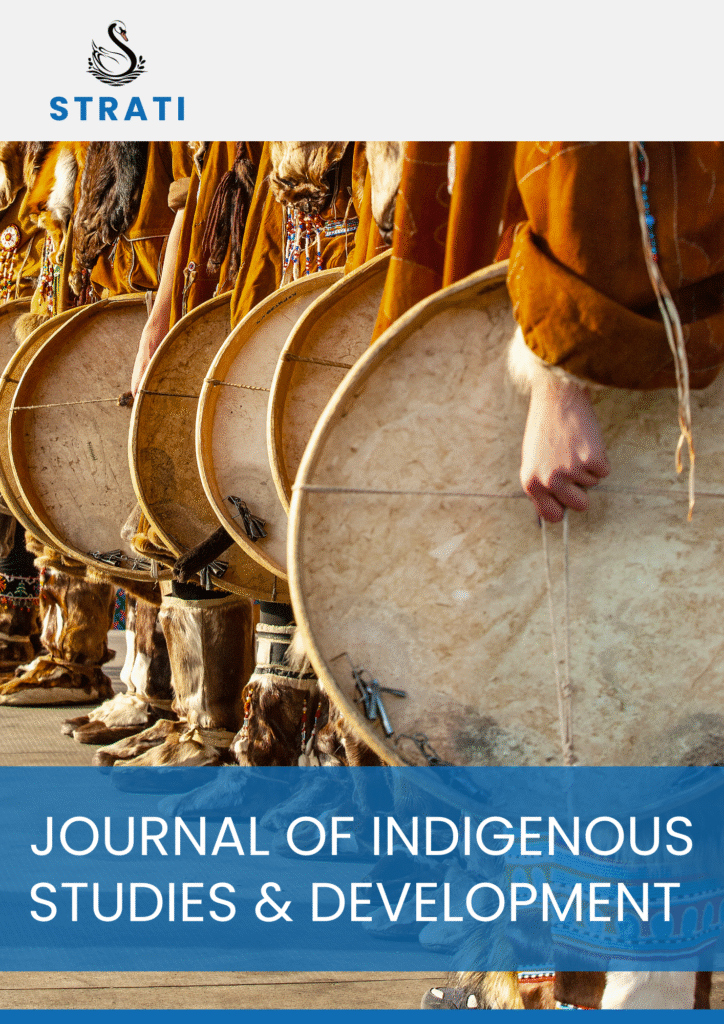
STRATI Journal of Indigenous Studies and Development

Home

Announcements

  • Expression of Interest
  • Aims and Scope

Journal Submission Guidelines

The STRATI Journal of Indigenous Studies and Development is a peer-reviewed, international, and open-access journal that offers a dedicated platform for interdisciplinary scholarship, indigenous knowledge systems, and policy discourse centered on the rights, cultures, histories, and development trajectories of Indigenous Peoples across the globe. The journal prioritizes research that amplifies Indigenous voices, challenges colonial legacies, and fosters equity, justice, and sustainability in development planning and practice.

It welcomes original academic research, community-engaged scholarship, participatory studies, and practitioner perspectives that address the socioeconomic, political, cultural, spiritual, and ecological dimensions of Indigenous life and development. Contributions that are co-authored with Indigenous scholars, elders, or communities, or that reflect community-based participatory methodologies are particularly encouraged.

Manuscripts should generally be between 6,000 and 8,000 words with an abstract of no more than 200 words. All submissions undergo double-blind peer review and must include a plagiarism report. The journal seeks to bridge academic inquiry with actionable development policy, while ensuring Indigenous ethical protocols and intellectual property rights are respected.

The STRATI Journal of Indigenous Studies and Development aims to explore and reimagine development from Indigenous perspectives, with a focus on decolonizing knowledge systems, safeguarding Indigenous rights and identities, and promoting culturally grounded and ecologically respectful pathways to well-being. The journal provides a space for critical dialogue on how Indigenous Peoples experience and shape development, and how their voices can be centered in policy-making, resource governance, and social transformation.

Interdisciplinary in orientation, the journal draws on anthropology, development studies, sociology, political science, law, environmental studies, education, cultural studies, and Indigenous epistemologies. It engages with both theoretical debates and practical issues confronting Indigenous communities today—including land rights, climate justice, cultural revitalization, self-determination, and the impacts of state and market interventions.

Detailed Themes

The journal welcomes contributions that engage with, but are not limited to, the following themes:

  1. Indigenous knowledge systems, worldviews, and epistemologies
  2. Self-determination, sovereignty, and governance
  3. Land rights, land tenure systems, and resource access
  4. Decolonization and postcolonial development
  5. Traditional ecological knowledge and environmental stewardship
  6. Climate change impacts and Indigenous adaptation strategies
  7. Cultural heritage, language preservation, and revitalization
  8. Indigenous education systems and curriculum reforms
  9. Health and well-being in Indigenous communities
  10. Gender roles, matriarchal traditions, and intersectionality
  11. Youth and intergenerational knowledge transmission
  12. Food sovereignty and traditional agricultural practices
  13. Natural resource governance and extractive industries
  14. Mining, deforestation, and environmental justice
  15. Free, prior, and informed consent (FPIC) and consultation rights
  16. Migration, displacement, and Indigenous refugees
  17. Indigenous entrepreneurship and sustainable livelihoods
  18. Spirituality, rituals, and sacred landscapes
  19. Colonial trauma, healing, and resilience
  20. Cultural expressions, art, storytelling, and performance
  21. Water rights and sacred water governance
  22. Traditional medicine and biocultural diversity
  23. Digital inclusion and Indigenous media/ICTs
  24. Legal pluralism and customary law
  25. Indigenous women’s leadership and empowerment
  26. Global Indigenous movements and transnational networks
  27. Indigenous Peoples and the Sustainable Development Goals (SDGs)
  28. Policy frameworks and international instruments (e.g., UNDRIP, ILO 169)
  29. Statelessness, documentation, and Indigenous identity
  30. Tourism, commodification, and cultural appropriation
  31. Indigenous participation in climate negotiations and global forums
  32. Barriers to political representation and democratic inclusion
  33. Community-based monitoring and impact assessment
  34. Human rights, justice systems, and conflict resolution
  35. Academic research ethics and Indigenous data sovereignty

Send your paper to Email: strat.institute@gmail.com

STRATI Journal of Indigenous Studies and Development” invites the university professors, researchers, and experts including experts based in government and non-government agencies and communities and members of civil society to serve as Editor(s), Sub-Editor(s), Guest Editors, Members on Advisory Board, and Peer Review Board in varied areas of scientific knowledge and expertise.

The expression of interest along with the Curriculum Vitae including a passport size and Google Scholar link can be sent to the Consulting Editor at E-mail: strat.institute@gmail.com